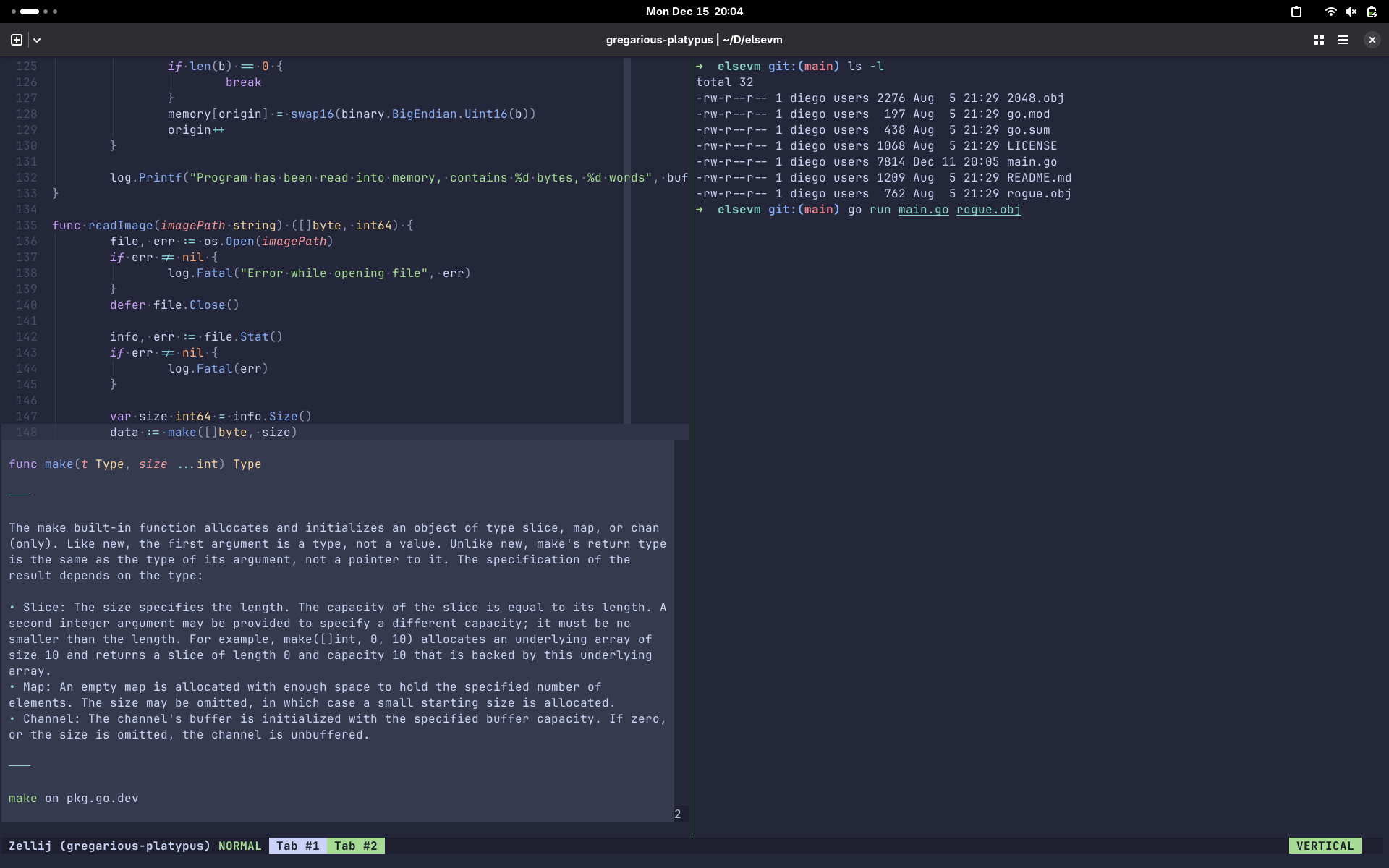
Recently, I got a new laptop for personal use and took the opportunity to revisit — and rethink — several of the development tools I use on a daily basis. This post is a snapshot of my current setup, along with some of the changes I’ve made since switching machines.
The new machine is a Lenovo ThinkPad E14 Gen 6, powered by a Ryzen 5 7535U, 16 GB of RAM, and a 256 GB SSD. So far, it has been more than enough for all my current needs, both for software development and general use. I’m currently running NixOS on it.
This post is not meant to be static. I plan to keep it updated as I continue experimenting with and adopting new tools over time.
Here are some of the tools I’m using right now:
GNOME: I decided to switch back to GNOME after using i3wm for about two and a half years, followed by a few more months with Hyprland. I made the switch simply because, with GNOME, everything just works. I no longer need to manually install and configure simple tools like PDF readers and image viewers, as I did when using tiling window managers.
Helix: In the same spirit, I decided to move away from Neovim. I spent countless hours configuring it and testing new plugins — and eventually realized I was spending more time tweaking my editor than actually coding. With Helix, almost everything comes ready to go, and within just a few hours I was already comfortable with the most important movements and workflows.
Zellij: This was my most recent switch. I’ve always defaulted to Tmux, but after hearing good things about Zellij — especially its lock mode and more intuitive keybindings — I decided to give it a try. I’m still forming an opinion, but my first impressions have been positive so far.
Ghostty: After quite some time with Alacritty, I decided to give Ghostty a try — purely because it’s written in Zig. No deeper reason than that; I just wanted to use something built with the language.
Fish has been my shell of choice for quite some time now. I’ve heard good things about Nushell, but I haven’t properly tested it yet. There are also a few other tools on my “to-try” list, such as Lazygit and Jujutsu.
As you can probably tell, most of these software changes are about significantly reducing the time I spend on configuration. I’ve reached a point where I prefer tools that “just work,” allowing me to focus more on building things instead of constantly tuning my setup.
At work, my setup is essentially the same — the only real difference is the operating system, where I use Arch Linux (btw). Most of these choices are about tools that “just work”, reducing time on configuration. If you’re curious, my setup is documented in my dotfiles and NixOS configuration repositories, which I keep updating as things evolve.